How to Cook Rice Properly: Ratios, Soaking and the Three Methods
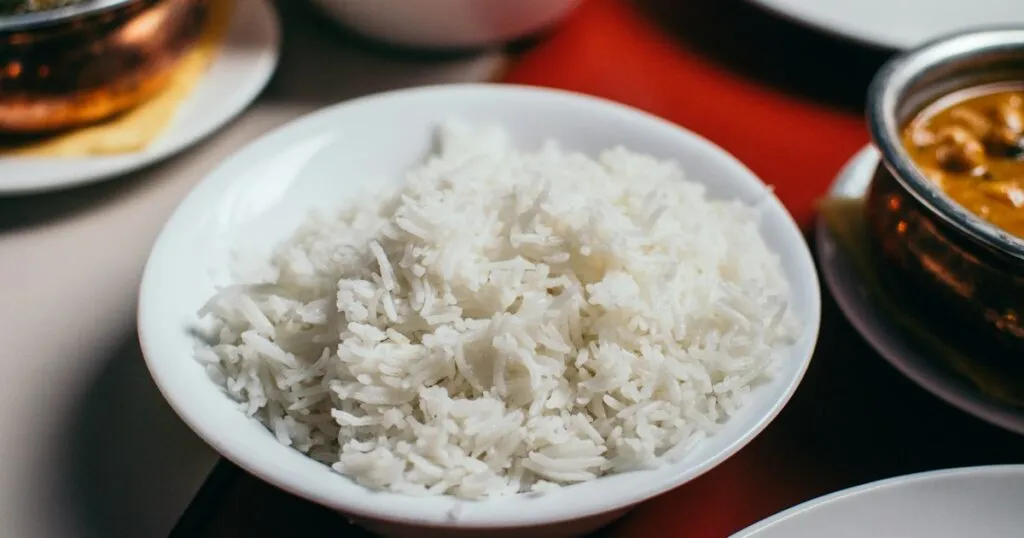
Rice goes wrong in three specific ways and each has a single main cause: sticky rice was not rinsed, mushy rice had too much water or too long a cook, and rice with hard centres was cooked too fast for the water to reach the middle. Once you know which of those you are producing, the fix is usually one adjustment rather than a new recipe.
The other thing worth knowing is that different rices want different treatment. Basmati wants rinsing, soaking and gentle handling so the long grains stay separate and intact. Short-grain rice for khichdi or curd rice benefits from exactly the opposite — some starch and some breakdown are the point.
Ingredients
- 1 cup basmati rice (or any long-grain rice)
- Water: quantity depends on the method, see below
- 1/2 teaspoon salt
- 1 teaspoon ghee or oil (optional; helps keep grains separate)
- Optional whole spices: 1 bay leaf, 2 cloves, 1 small piece of cinnamon, 2 green cardamom
Measure the rice and the water in the same cup, whatever its size. The ratio is what matters, not the absolute volume, and using one vessel for both removes a whole class of error.
Method
These first three steps apply to every method; the fourth is where they diverge.
- Rinse until the water runs clear, usually three to five changes. This washes off surface starch, which is what makes grains stick together. Do it gently; basmati grains break easily.
- Soak for 20 to 30 minutes for basmati, then drain. Soaked grains cook more evenly and lengthen rather than swell, which is why restaurant basmati looks the way it does.
- Drain thoroughly and account for the water the rice has absorbed when you measure your cooking water.
- Cook by one of the three methods below.
- Rest, covered, for 5 to 10 minutes after cooking, off the heat. The moisture redistributes and the grains firm slightly. Skipping the rest is why rice sometimes seems wet at the bottom and dry on top.
- Fluff with a fork, not a spoon, lifting from the edges. Stirring crushes grains and releases starch, which undoes the rinsing.
The pressure cooker ratio is lower than the pan ratio for a reason people often miss: a sealed cooker loses almost no water to evaporation, so the same rice needs less. Using the pan ratio in a cooker is the commonest cause of pressure-cooked rice coming out wet and clumped.
The draining method is the most forgiving and the one worth using when you need rice to be reliably good — for guests, or when you are cooking an unfamiliar rice. Because you test a grain and drain when it is right, you are not relying on a ratio being correct for that particular rice.
Why rinse, and why soak?
They do different jobs and both are commonly skipped.
Rinsing removes loose starch from the surface of the grains, left there by milling and by grains rubbing together. That starch is what makes cooked rice gluey and makes grains clump. Three to five rinses until the water runs mostly clear is enough; endless rinsing achieves nothing extra.
Soaking lets water penetrate to the centre of each grain before cooking starts. Soaked grains then cook evenly and quickly, which matters particularly for basmati because it means the grain elongates rather than swelling and splitting. Unsoaked basmati tends to cook unevenly — soft outside, firm in the middle — and breaks more when stirred.
The short-grain row is the useful exception to remember. For khichdi, curd rice or a rice pudding, the starch that you carefully wash away for pulao is exactly what gives the dish its texture. Rinse those lightly, do not soak, and let them break down — which is the opposite of everything else here, and deliberately so.
What is going wrong?
The resting row is the one that surprises people, because it looks like doing nothing. When rice finishes cooking, the water is unevenly distributed — more at the bottom, less at the top. Ten minutes covered off the heat lets it even out, and the difference between rested and unrested rice from the same pan is clearly noticeable.
One more frequent cause of inconsistency: rice ages. Older basmati absorbs more water and gives better separation, which is why aged basmati is sold at a premium. If your usual ratio stops working after buying a new bag, the rice has changed, not your technique.
How do you reheat and store rice safely?
This deserves more care than it usually gets, because cooked rice is one of the foods where storage practice genuinely matters. Uncooked rice can carry spores of a bacterium that survive cooking, and if cooked rice is left at room temperature for hours those spores can multiply and produce a toxin that reheating does not destroy.
- Cool it quickly and refrigerate within an hour or so rather than leaving it out all afternoon. Spreading it in a shallow dish cools it faster than leaving it in a deep pot.
- Refrigerate for no more than a day, as a safe default, in a covered container.
- Reheat thoroughly, until steaming hot throughout, and only once.
- Add a splash of water when reheating, which steams the grains and restores texture. A covered pan on low heat or a microwave with a damp cover both work.
- If in doubt, discard it. Rice left out overnight is not worth the risk, and the food smells and looks entirely normal when it is unsafe — which is precisely the problem.
None of this makes rice dangerous to cook in advance. It makes the cooling step the one that matters: rice refrigerated promptly and reheated properly the next day is entirely fine, and that covers the way most households actually use leftover rice. Day-old refrigerated rice is also better than fresh for making fried rice, since the drier grains separate rather than clumping.
How do you make it taste of something?
Plain rice is a vehicle and often should stay plain, particularly next to a well-made dal. When you do want the rice itself to carry flavour, the additions worth making are few and they go in at the start.
- Whole spices in the cooking water. Bay leaf, cloves, cinnamon, cardamom. They perfume the grains without making the rice spiced. Remove before serving if you can.
- A teaspoon of ghee in the water, which helps grains stay separate and adds aroma.
- Salt in the water, not after. Rice seasoned after cooking tastes salty on the outside and bland inside.
- Fry the drained rice briefly in ghee with the whole spices before adding water, which is the start of any pulao and deepens the flavour considerably.
- Finish with fried onions, nuts or fresh coriander, added after the rest rather than stirred in during cooking.
The frying step in point four is the difference between cooked rice and pulao, and it takes two minutes. Drained soaked rice, ghee, whole spices, a minute of gentle stirring until the grains look glossy, then the water — and you have the base technique for most of the rice dishes in Indian home cooking.
For dishes built on this, see our soya chunks pulao, North Indian veg biryani and veg tehri. Rice works hardest next to a properly tempered dal and a raita; if you would rather have bread, our guide to soft rotis covers the other staple. More in our recipes section.
What is the correct water-to-rice ratio?
It depends on the method. For soaked basmati in a covered pan, about 1 to 1.5. In a pressure cooker, about 1 to 1.25, because a sealed cooker loses almost no water to evaporation. With the draining method you use plenty of water and simply drain when the rice is done.
Why is my rice sticky?
Either it was not rinsed enough or it was stirred during cooking. Rinsing removes loose surface starch, which is what makes grains clump, and stirring releases more starch from the grains themselves. Rinse until the water runs mostly clear and fluff with a fork rather than a spoon.
Do I really need to soak basmati?
For the best result, yes. Soaking lets water reach the centre of each grain before cooking, so the rice cooks evenly and elongates rather than swelling and splitting. Unsoaked basmati tends to be soft outside with firmer centres and breaks more easily.
Why does my rice have hard centres?
Either it was not soaked, or the heat was too high so the outside cooked before water reached the middle. Soak for 20 to 30 minutes and cook on the lowest flame with the lid on, resisting the urge to check.
Should every rice be rinsed and soaked?
No. Basmati benefits most from both. Short-grain rice for khichdi, curd rice or kheer should be rinsed only lightly and not soaked, because the starch you wash away for pulao is exactly what gives those dishes their texture. Brown rice needs a longer soak and more water.
Is it safe to keep cooked rice overnight?
Cool it quickly and refrigerate within about an hour, keep it no more than a day, and reheat thoroughly and only once. Uncooked rice can carry spores that survive cooking and multiply if rice sits at room temperature for hours. Rice left out overnight should be discarded.
Why does my usual ratio suddenly stop working?
Rice ages. Older basmati absorbs more water and separates better, which is why aged rice costs more. If your results change after opening a new bag, adjust the water slightly rather than assuming your technique has slipped.