Homemade Paneer: How to Make It Soft and Why It Turns Rubbery
Paneer is milk curdled with an acid, strained and pressed — and whether it turns out soft or rubbery is decided by the fat content of the milk, the temperature when the acid goes in, and how long and how hard you press it. Nothing else in the process has much effect, which is why homemade paneer is both easy and easy to get wrong in a specific, fixable way.
It is also cheaper and considerably better than most packaged paneer, which is typically firmer and drier because it has to survive transport and a shelf life. If you have been disappointed by paneer that squeaks in a curry, making your own solves it in twenty minutes of mostly waiting.
Ingredients
- 1 litre full-fat milk (buffalo milk, or full-cream cow milk)
- 2 to 3 tablespoons lemon juice, strained, or white vinegar
- 2 tablespoons cold water, to mix with the acid
- A pinch of salt (optional)
- Muslin or a thin cotton cloth, and a strainer
One litre of full-fat milk gives roughly 180 to 220 grams of paneer. Toned or skimmed milk gives less, and what it gives is drier and firmer — the fat is what makes paneer soft, so this is the one place where substituting a lower-fat option changes the result rather than just the nutrition.
Method
- Bring the milk to a boil in a heavy pan, stirring occasionally so it does not catch at the bottom. Rinsing the pan with water first helps prevent sticking.
- Take it off the heat and wait a minute. This is the step that matters most. Adding acid to furiously boiling milk gives harder curds; letting it drop slightly gives softer ones.
- Mix the lemon juice with the cold water and add it a spoonful at a time, stirring gently after each addition.
- Stop as soon as it separates. Within a minute you should see curds pulling away from a greenish, translucent whey. Add no more acid once that happens.
- Let it sit for 2 to 3 minutes, undisturbed, so the curds firm slightly and gather.
- Strain through muslin set in a sieve. Keep the whey; it is useful and the next section explains how.
- Rinse the curds briefly under cold water, still in the cloth. This washes off the acid so the paneer does not taste sour, and cools it so it stays tender.
- Squeeze gently to remove the bulk of the water, then gather the cloth into a bundle and twist the top.
- Press for 20 to 30 minutes under a moderate weight — a pan with a litre of water in it is about right. Longer and heavier gives firmer, drier paneer.
- Chill for 30 minutes before cutting, which firms the block so it cuts cleanly into cubes.
That last line matters because “soft” is not universally the goal. Paneer for a gravy should be soft and absorbent so it takes up the sauce. Paneer for tikka or for pan-frying needs to be firm enough to hold its shape on a skewer or in a hot pan. You control which you get by adjusting the pressing time, from the same batch of curds.
Which acid should you use?
Any food acid will curdle milk, and they differ in flavour and in how cleanly they work.
- Lemon juice — the usual choice, widely available, leaves a faint citrus note that rinsing removes. Strain out the pips and pulp.
- White vinegar — the most reliable and the fastest to separate, with a sharper smell that also rinses away. Use slightly less than you would lemon.
- Citric acid crystals — what commercial producers often use. Very consistent; dissolve a quarter teaspoon in water first.
- Yoghurt or sour whey — gentler, slower, and gives a noticeably softer, slightly tangy paneer. Needs more and takes longer to separate.
- What not to use: anything you would not want to taste faintly in the finished paneer, and never more acid than needed to separate it.
The sour-whey route is worth knowing because it closes a loop. Keep the whey from one batch at room temperature for a day or two and it sours; use that to curdle the next batch, and you get softer paneer with no lemon flavour at all. It is how paneer was traditionally made before bottled acids were common.
What should you do with the whey?
Not throw it away, which is what happens in most kitchens. A litre of milk yields most of its volume as whey, and it carries protein, minerals and a pleasant mild tang.
The roti suggestion is the easiest to adopt because it needs no planning: you are making paneer, you have whey, and you are probably making rotis the same day. The slight acidity and the protein both help the dough, and it pairs neatly with the hydration point in our guide to making soft rotis.
Whey keeps two to three days refrigerated. Beyond that it sours considerably, at which point it is still useful for curdling the next batch but no longer pleasant to drink or cook with directly.
Why does paneer go rubbery in a curry?
Usually because it was cooked too long or at too high a heat. Paneer does not need cooking — it is already a finished food — so time in a hot gravy only tightens its protein structure and squeezes out moisture. That is what produces the squeaky, bouncy texture people complain about.
- Add paneer in the last two or three minutes, on a low simmer, just long enough to heat through and absorb some sauce.
- Soak store-bought paneer in warm water for 15 to 20 minutes before use. This rehydrates and softens a block that has firmed in the fridge or in transit, and it works noticeably well.
- If you fry it, fry briefly and on moderate heat. Hard frying drives out water and sets the surface tough; a light golden colour is enough.
- Do not boil it in gravy and then reheat. Paneer that has been cooked hard once and reheated is where the worst texture comes from.
- For leftovers, reheat gently with a splash of water or milk rather than on high heat.
The warm-water soak is worth repeating because it rescues almost any packaged paneer and almost nobody does it. Twenty minutes in warm — not boiling — water before it goes anywhere near a pan transforms a firm, dry block. Try it once with the same brand you have been disappointed by.
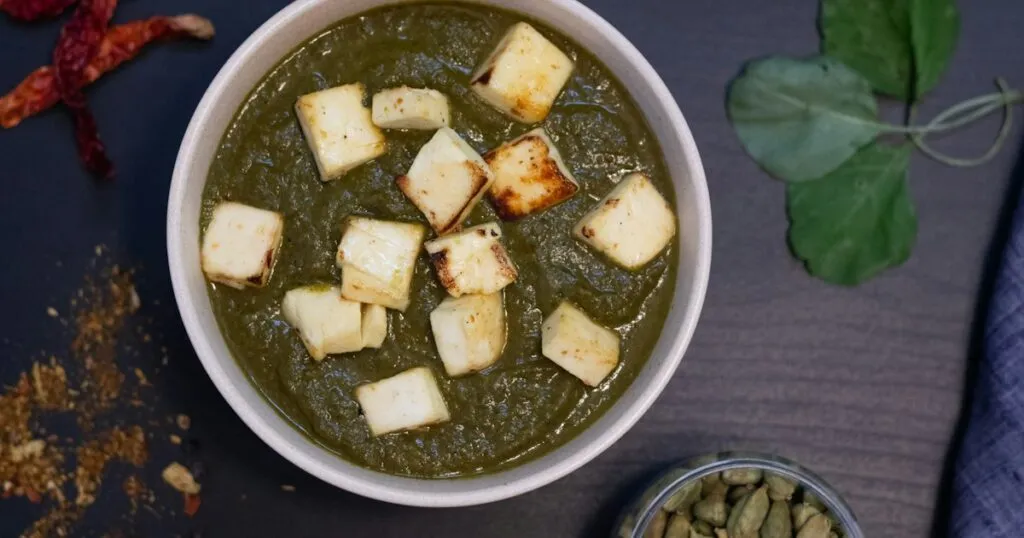
For dishes to use it in, our restaurant-style paneer butter masala and dhaba-style palak paneer both benefit from fresh homemade paneer added at the end, and stuffed aloo paneer paratha is a good use for a crumbly batch.
What is going wrong?
The crumbling problem is the easiest to fix and the most frustrating when you do not know the cause. Paneer cuts cleanly only when it is both pressed enough and properly cold. Thirty minutes in the fridge under the weight, rather than on the counter, solves it.
A crumbly batch is not wasted, incidentally. It is exactly right for paratha stuffing, for bhurji, or crumbled over a sabzi — so the failure mode has a use, which is more than can be said for most kitchen mistakes.
How long does it keep?
Two to three days in the fridge, submerged in water in a covered container, with the water changed daily. The water keeps it from drying out and firming up, which is what happens to paneer left exposed on a shelf.
Freezing works for up to a month but changes the texture, making it firmer and slightly grainy. If you do freeze it, cut the cubes first, freeze them spread out before bagging so they do not fuse, and thaw in warm water rather than at room temperature — which also partly restores the softness.
Because homemade paneer has no preservatives and more moisture than packaged, treat the three-day limit as real rather than conservative, and discard it if it smells sour or the surface becomes slimy. The whole point of making it at home is that twenty minutes gets you a fresh batch whenever you want one.
For more from-scratch basics, our making curd without a starter covers the other staple worth making at home, and idli dosa batter with tips is the third. Pair fresh paneer with soft rotis and a well-made dal for a complete meal. More in our recipes section.
How much paneer does one litre of milk make?
Roughly 180 to 220 grams from full-fat milk. Toned or skimmed milk gives less, and what it gives is drier and firmer, because the fat is what makes paneer soft. This is one case where using lower-fat milk changes the result rather than just the nutrition.
What makes paneer soft rather than rubbery?
Three things: full-fat or buffalo milk, adding the acid just off the boil rather than at a rolling boil, and pressing for only about 20 minutes under a moderate weight. Hotter milk and longer, heavier pressing both give firmer, drier paneer.
Which acid is best for curdling milk?
Lemon juice is the usual choice and vinegar is the most reliable and fastest. Citric acid is the most consistent. Soured whey from a previous batch gives the softest result with no citrus flavour at all, which is how paneer was traditionally made.
What can I do with the leftover whey?
Knead roti dough with it instead of water, which makes noticeably softer rotis, or cook rice and dal in it, use it in kadhi or soup, chill and spice it as a drink, or sour it for a day to curdle your next batch. It keeps two to three days refrigerated.
Why does my paneer go rubbery in a curry?
Because it was cooked too long or too hot. Paneer is already a finished food and does not need cooking, so time in a hot gravy only tightens its proteins and squeezes out moisture. Add it in the last two or three minutes on a low simmer.
How do I soften store-bought paneer?
Soak it in warm, not boiling, water for 15 to 20 minutes before cooking. This rehydrates a block that has firmed in the fridge or in transit and makes a substantial difference. It is the single most effective fix for disappointing packaged paneer.
How long does homemade paneer keep?
Two to three days in the fridge, submerged in water in a covered container with the water changed daily, which stops it drying out. It freezes for up to a month but becomes firmer and slightly grainy. Treat the three-day limit as real, since there are no preservatives.