
How to Make Soft Rotis Every Time: The Dough, the Rest and the Pan
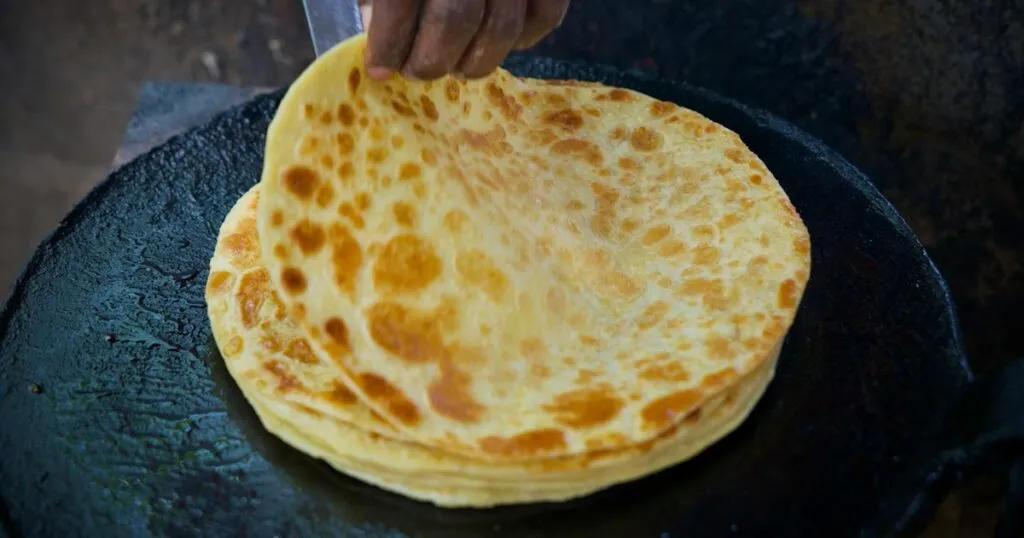
Hard rotis are almost always caused by dough that is too dry and not rested, cooked on a pan that is not hot enough. Those three things account for the overwhelming majority of the problem. Rolling technique matters for shape and for an even puff, and it is not usually what makes a roti leathery — which is why people who have rolled thousands of rotis can still produce hard ones if the dough was wrong.
The fix is a wetter dough than most people are comfortable with, a genuine rest of twenty minutes or more, and a tawa hot enough that the roti cooks in under a minute per side. Get those right and softness follows almost regardless of how neatly you roll.
Ingredients
- 2 cups whole wheat flour (atta), plus extra for dusting
- About 3/4 to 1 cup warm water, added gradually
- 1/2 teaspoon salt (optional; many households leave it out)
- 1 teaspoon oil or ghee, for the dough (optional but helps softness)
- Ghee or oil for brushing the cooked rotis
The water quantity is deliberately a range, because atta varies. Different brands, different grinds and different humidity all change how much water the flour takes, which is why following a fixed measurement produces inconsistent dough. Add water gradually and judge by feel rather than by the cup.
Method
- Add water in stages. Put the flour in a wide bowl, make a well, and add about two-thirds of the warm water. Mix with your fingers until it comes together in shaggy lumps, then add the remaining water a little at a time.
- Aim for softer than you think. The dough should be soft enough to take an impression from your finger easily and just barely tacky — not sticky, but close. If it feels firm and smooth like a ball of clay, it is too dry.
- Knead for 5 to 7 minutes. Push with the heel of your hand, fold, turn, repeat. The dough becomes noticeably smoother and more elastic as the gluten develops.
- Add the oil at the end and knead it in for another minute, which helps the rotis stay soft as they cool.
- Rest, covered, for at least 20 minutes. Thirty is better. Cover with a damp cloth or a lid so the surface does not dry out. This is the step most often skipped and it does more for softness than any other.
- Divide and roll. Make equal balls, flatten, dust lightly and roll from the centre outwards, turning the roti a quarter turn every few strokes. Dust as little as you can — excess dry flour burns on the tawa and toughens the roti.
- Cook on a properly hot tawa. Place the roti on, and when small bubbles appear in 20 to 30 seconds, flip. Cook the second side until pale brown spots appear, then flip again.
- Puff it. Press gently around the edges with a folded cloth, or lift the roti onto an open flame for a few seconds, and it should balloon.
- Brush with ghee and stack in a covered container or wrapped in a cloth. Stacking traps steam, and that steam is what keeps them soft.
The heat point is worth understanding rather than just following. A roti puffs because the water inside turns to steam faster than it can escape, forcing the two layers apart. On a cool tawa the water leaves slowly as vapour, the layers never separate, and you are left with a dry disc. That is why a roti that fails to puff is almost always also a hard one.
Why does resting matter so much?
Two things happen during the rest, and both affect the finished roti. The flour continues absorbing water, so a dough that felt slightly too wet becomes exactly right — which is why you should hydrate for how it will be after resting, not how it feels while kneading. And the gluten network, which was tightened by kneading, relaxes, so the dough rolls out without springing back.
Dough that springs back as you roll is unrested dough, and fighting it has two consequences: you roll unevenly, and you work the dough further, which tightens it again. If you find yourself pressing hard, the answer is to stop and wait ten minutes rather than to press harder.
You can rest dough in the fridge for several hours or overnight, which many households do for convenience. Bring it back to room temperature before rolling, since cold dough is stiff and will not puff properly.
How do you keep rotis soft for hours?
This is a separate problem from making them soft in the first place, and it has a different answer: trap the steam. A roti hardens as it loses moisture, so anything that slows that loss keeps it soft.
The cloth matters more than the container. A cloth absorbs the condensing steam and releases it back slowly, which keeps rotis soft without making them wet. A box with no cloth collects water on the lid, which drips onto the top roti and makes it soggy while the ones underneath go on drying.
For reheating, sprinkle a few drops of water on the roti and put it on a hot tawa for fifteen seconds a side. Microwaving works but tends to make rotis either rubbery or brittle depending on timing; if you do, cover them with a damp cloth.
What is going wrong?
The dusting-flour row causes a problem people rarely diagnose. Loose dry flour carried onto the tawa burns, and those burnt particles both taste bitter and transfer onto the next roti. Wiping the tawa with a dry cloth between rotis, and using as little dusting flour as you can manage, fixes a complaint usually blamed on the atta.
Does the flour matter?
Yes, and more than recipes usually acknowledge. Stone-ground atta behaves differently from roller-milled, and brands differ in how much water they absorb and how much bran they contain. Higher bran content makes rotis more nutritious and slightly less soft, because bran interrupts the gluten structure.
Two practical implications. If you switch brands and your rotis suddenly change, that is the flour rather than your technique, and the fix is adjusting the water. And if you want softer rotis from a high-bran atta, a slightly wetter dough and a longer rest compensate well.
Mixing a small proportion of another flour is common and worth knowing about: a little besan or a little jowar changes flavour and texture, while reducing the gluten-forming wheat proportion makes the dough harder to handle. Start with no more than a quarter of the total if you experiment.
A practice plan
If your rotis are inconsistent, change one thing at a time across a week rather than everything at once, so you learn what mattered in your kitchen with your flour.
- Day one: only increase the water. Make the dough noticeably softer than usual and change nothing else.
- Day two: only add the rest. Keep your usual dough, but rest it a full thirty minutes, covered.
- Day three: only raise the heat. Get the tawa properly hot and keep each side under a minute.
- Day four: combine the two that helped most, and note the water quantity that worked so you can repeat it.
Most people find the first two make the difference, and once the right water quantity for their atta is known, it stops being a judgement call. That is really the whole skill: softer dough, longer rest, hotter pan, and the same measurement every time.
Rotis need something to go with them. Our khadi masoor dal and Punjabi rajma masala are both weeknight staples, and palak paneer or aloo patta gobhi matar ki sabzi work well alongside. If you want to go further with the same dough, see our dhaba-style aloo paratha and stuffed aloo paneer paratha. More in our recipes section.
Why do my rotis become hard after cooling?
Almost always because the dough was too dry or was not rested. A roti hardens as it loses moisture, and dough made with too little water has less to lose before it goes leathery. Make the dough softer than feels comfortable and rest it at least 20 minutes.
How soft should roti dough be?
Soft enough that your finger sinks in with almost no effort, and just barely tacky to the touch without being sticky. If it feels firm and smooth like clay, it is too dry. Remember the flour absorbs more water during resting, so hydrate for how it will be after the rest.
Why does my roti not puff up?
Usually the tawa is not hot enough, or the roti was rolled unevenly. Puffing happens when water inside turns to steam faster than it can escape, forcing the layers apart. On a cool pan the moisture leaves slowly and the layers never separate, which also leaves the roti dry.
How long should roti dough rest?
At least 20 minutes, and 30 is better. During the rest the flour finishes absorbing water and the gluten relaxes so the dough rolls without springing back. You can rest it in the fridge for hours, but bring it to room temperature before rolling or it will not puff.
How do I keep rotis soft for hours?
Stack them hot, wrapped in a clean cloth, inside a covered casserole, and brush each with ghee as it comes off the tawa. The cloth absorbs condensing steam and releases it slowly. A box without a cloth collects water on the lid and makes the top roti soggy.
Why do my rotis taste slightly bitter with dark spots?
Loose dusting flour carried onto the tawa burns, and those burnt particles both taste bitter and transfer to the next roti. Use as little dusting flour as you can manage and wipe the tawa with a dry cloth between rotis.
Does the brand of atta make a difference?
Yes. Stone-ground and roller-milled attas behave differently, and brands vary in water absorption and bran content, with more bran giving slightly less soft rotis. If your results change after switching brands, adjust the water rather than your technique.