Raga and Taal Explained: A Beginner’s Guide to Indian Classical Music

A raga is a melodic framework — a selected set of notes with rules about how they move — and a taal is a rhythmic cycle of a fixed number of beats. Almost every Indian classical performance is one musician improvising within one raga over one taal, and knowing just those two things is enough to follow a concert without any training at all.
People often assume Indian classical music requires years of study before it makes any sense. It does to perform, but not to listen to. The structure is unusually clear once someone points out what to listen for, and the pleasure of recognising a cycle coming back around to its first beat is available on your first evening.
What exactly is a raga?
A raga is not a scale and not a tune. The closest honest description is a framework: a chosen set of notes, plus rules about which notes are emphasised, which are approached from above or below, which can be skipped on the way up but not on the way down, and which short phrases are characteristic of it. Two ragas can use exactly the same notes and still sound completely different because those rules differ.
The note names are the seven swaras: Sa, Re, Ga, Ma, Pa, Dha, Ni, with Sa repeating at the octave. Sa is not a fixed pitch like a Western C — the performer chooses where to put it to suit their voice or instrument, and everything else is relative to it. This is why two recordings of the same raga can sit at different pitches and still be the same raga.
What is a taal, and how do you count it?
A taal is a rhythmic cycle with a fixed number of beats that repeats for the whole composition. The beats are grouped into sections, and the first beat of the cycle — called the sam — is the moment everything points toward. When a tabla player and a soloist arrive together on the sam after a long improvised passage, that arrival is the dramatic event of the performance, and audiences applaud it.
Teentaal, the sixteen-beat cycle above, is by far the most common and worth learning first. Try the clap pattern while listening to any tabla recording: clap on one, count four, clap on five, count four, wave your hand on nine, count four, clap on thirteen. When you come back around to the clap on one at the same moment the tabla does, you are counting the taal correctly.
Other cycles you will meet are Ektaal with twelve beats, Jhaptaal with ten, Rupak with seven and Dadra with six. The counting system is the same; only the grouping changes.
EMI CalculatorHome, car or personal loan: see your monthly EMI and total interest in seconds.Calculate your EMI free →How is a performance structured?
A Hindustani classical performance usually moves from slow and free to fast and tight, over anywhere from twenty minutes to over an hour on a single raga. Knowing the stages makes a long performance much easier to stay with, because you can hear where you are in the arc.
- Alap. Slow, unmetered, no percussion. The performer unfolds the raga note by note, establishing its character. This is where listeners new to the form often lose patience — it helps to hear it as an introduction of a personality rather than as a tune being delayed.
- Jor. A pulse appears, still without the tabla, and the pace begins to build.
- The composition. The tabla enters, the taal begins, and a fixed composition is stated — a bandish in vocal music, a gat on an instrument.
- Improvisation. The bulk of the performance: the soloist departs from the composition and returns to it, each cycle ending back on the sam.
- The fast section. Tempo increases, exchanges between soloist and tabla get shorter and more intricate, and the piece ends on a decisive sam.
Carnatic music, the South Indian tradition, organises things differently — more composition-centred, with its own vocabulary of raga and tala and a distinct concert format — but the underlying pair of ideas, a melodic framework and a rhythmic cycle, is shared. The relationship between the two traditions is a large subject in itself and worth exploring separately.
What should you actually listen for?
Six things, and none of them require knowing the raga’s name.
The drone is the item to start with. Most newcomers hear the tanpura as background texture and tune it out, when in fact it is the reference point that makes the whole system work — every note in the raga is heard in relation to that held Sa. Once you can hear the drone deliberately, the soloist’s choices stop sounding arbitrary.
Where should a beginner start listening?
Not with a ninety-minute alap. A few practical suggestions:
- Begin with instrumental, not vocal. Sitar, sarod, bansuri or santoor are easier for a first-time listener than khayal vocal, where the text and ornamentation add a layer.
- Start with short recordings. Ten to fifteen minute pieces exist in large numbers and are a far better entry than a full concert.
- Listen to the same piece several times rather than many pieces once. Familiarity is what makes the structure audible.
- Try a raga tied to the time you are listening. The morning and evening associations are real and noticeable.
- Go to a live concert if you can. Watching the audience count and react teaches you the taal faster than any explanation.
- Do not worry about naming ragas. Experienced listeners sometimes disagree about identification. Enjoyment does not depend on it.
That last point is worth taking seriously, because the fear of not knowing enough keeps a lot of people from listening at all. Nobody is testing you. The music was built to be enjoyed by audiences, most of whom could not notate a single phrase of it.
How does this connect to dance and to film music?
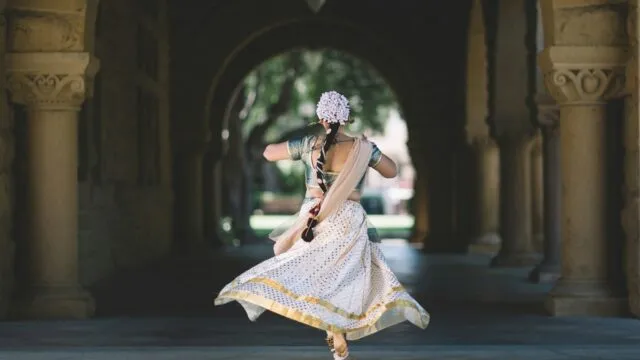
Directly, in both cases. Indian classical dance is set to classical music, and the rhythmic cycles a dancer’s footwork articulates are the same taals described above — which is why understanding taal improves dance watching immediately. Our guide to the eight recognised classical dance forms covers how each style treats rhythm differently.
Film music draws on ragas constantly, usually without announcing it. A great many well-known Hindi film songs are built on recognisable ragas, and once you know a few, you start hearing them in places you did not expect. This is the most enjoyable stage of learning to listen, and it arrives sooner than people assume.
Cross-tradition work is worth seeking out too — our profile of the flamenco musician bridging Spain and India is one example of what happens when two rhythmically sophisticated traditions meet.
For more on Indian art traditions, see our guides to Warli art, Madhubani painting and rangoli designs, or browse the culture and lifestyle section.
What is the difference between a raga and a scale?
A scale is just a set of notes. A raga includes the notes but adds rules about how they move: which are emphasised, which are approached from above or below, which may be skipped ascending but not descending, and which short phrases are characteristic. Two ragas can use identical notes and sound entirely different.
What is a taal?
A taal is a rhythmic cycle with a fixed number of beats that repeats through a composition. The beats are grouped into sections, and the first beat of the cycle, the sam, is the point everything resolves to. Teentaal, with sixteen beats in four groups of four, is the most common.
How do I count teentaal?
Clap on beat one, count two three four, clap on five, count to eight, wave your hand on nine instead of clapping because it is the khali or empty beat, count to twelve, clap on thirteen, count to sixteen, then return to the clap on one.
Is Sa a fixed pitch like C?
No. Sa is relative, and the performer chooses where to place it to suit their voice or instrument. Everything else in the raga is defined in relation to that chosen Sa, which is why two recordings of the same raga can sit at different pitches.
What are the stages of a Hindustani performance?
Alap, which is slow and unmetered with no percussion; jor, where a pulse appears; the fixed composition, where the tabla and the taal enter; the improvisation section, which forms the bulk of the performance; and a fast closing section ending on the sam.
What should a complete beginner listen to first?
Short instrumental recordings of ten to fifteen minutes on sitar, sarod, bansuri or santoor, rather than long vocal performances. Listen to the same piece several times instead of many pieces once, since familiarity is what makes the structure audible.
Do I need to identify the raga to enjoy the music?
No. Experienced listeners sometimes disagree about identification, and the music was written for audiences who could not notate any of it. Listening for the drone, the home note, the recurring phrase and the arrival on the sam is more than enough.