
Shopify vs WooCommerce in India: Which Should You Choose for Your Store?

Disclosure: BlogShog itself runs on WordPress, and we have no paid relationship with Shopify. Third-party comparison pages for India often quote very different prices for the same plans, so this article compares structure and trade-offs instead of copying numbers that may be wrong or outdated. Before you buy, ask both options for a written, current price including GST.
Key takeaways
- Shopify is a hosted platform; WooCommerce is a plugin for WordPress that you host yourself.
- Total cost = platform + hosting + theme + plugins or apps + payment fees + maintenance.
- Check which Indian payment gateways, GST invoicing and shipping tools work on your plan.
- You can migrate later, but it costs time, so choose with growth in mind.
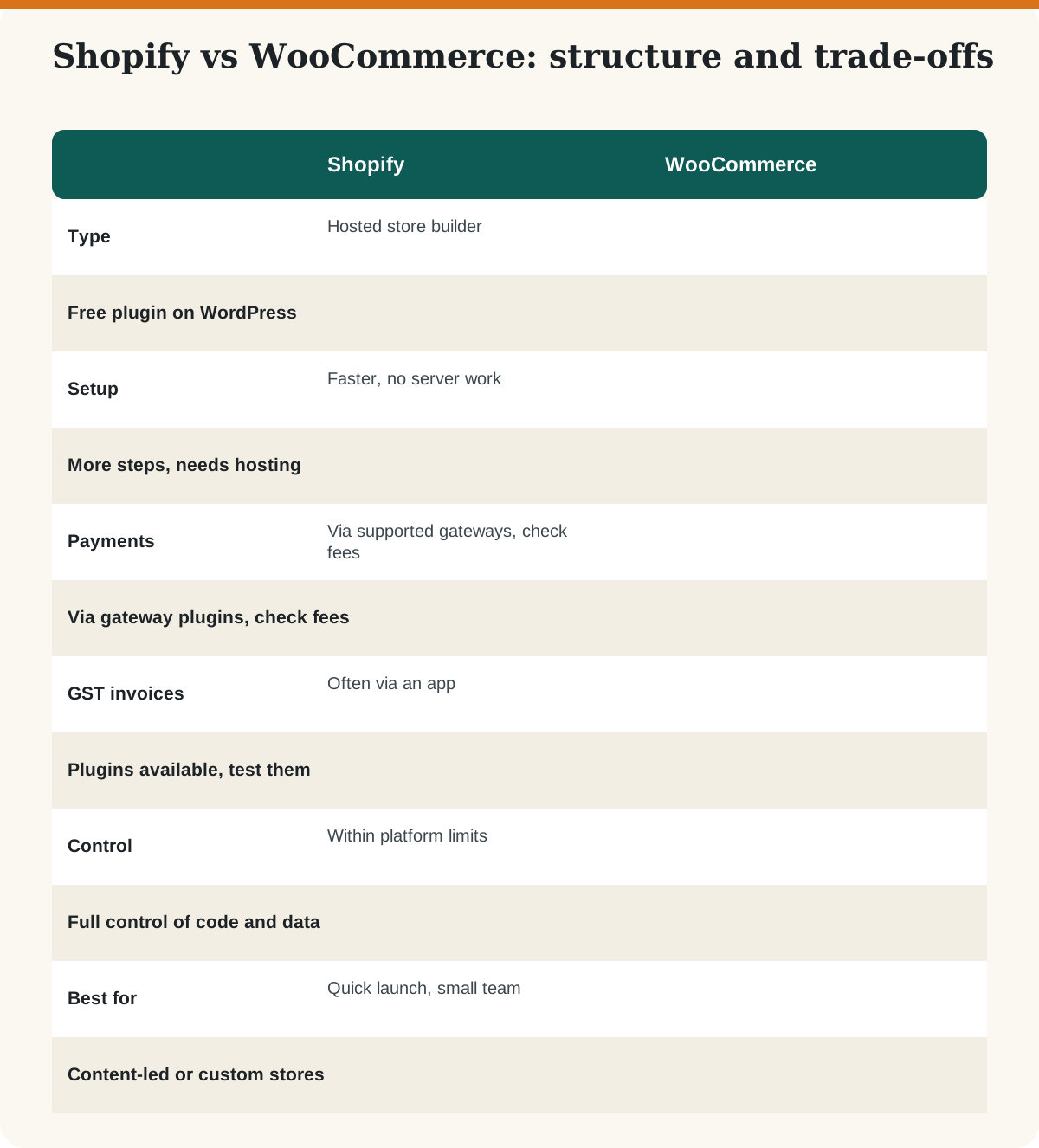
How do Shopify and WooCommerce compare?
What is it like to set up each one?
Shopify: you sign up, pick a theme, add products and connect a payment gateway from inside one dashboard. Hosting, security certificates and updates are handled for you, so a simple store can be live within days. The trade-off is that you work inside Shopify’s structure: deeper changes mean a paid app or a developer who knows Shopify’s templating.
WooCommerce: you first need a domain, hosting and a WordPress install, then you add the WooCommerce plugin, a theme and the extensions you need, such as payment gateways, shipping and invoicing. You decide where the site is hosted and how it is configured. That flexibility is the point, but it also means you, or your developer, handle backups, security and updates.
EMI CalculatorHome, car or personal loan: see your monthly EMI and total interest in seconds.Calculate your EMI free →What does each really cost?
| Cost line | Shopify | WooCommerce |
|---|---|---|
| Platform | Monthly subscription | Software is free |
| Hosting and security | Included | You buy hosting and manage updates |
| Theme | Free and paid themes | Free and paid themes |
| Extra features | Paid apps, often monthly | Plugins, free and paid |
| Payment fees | Gateway fee, plus any platform fee | Gateway fee |
| Support and upkeep | Vendor support | Your developer or host |
Build a one-year cost sheet for both, including GST on subscriptions and developer hours. Compare totals, not headline prices.
What matters specifically for Indian sellers?
- Payments: make sure your preferred Indian gateway supports UPI, cards, net banking and, if you need it, cash on delivery. Confirm that the gateway has a maintained plugin or app for your platform.
- GST invoices: invoices need your GSTIN, HSN codes where applicable and the right tax split between CGST/SGST and IGST. Test a sample invoice with your accountant before launch. Our guide to GST for online sellers covers the basics.
- Shipping: check whether the courier aggregators you plan to use have an integration, and whether pincode serviceability and cash-on-delivery handling work in your setup.
- Languages: if you want a Hindi or other regional storefront, check how each platform handles translation and local-language checkout.
- Marketplaces: many sellers run their own store alongside Amazon or other marketplaces. See how to sell on Amazon India.
Which is better for SEO and content?
Both can rank well when product pages and content are good. WooCommerce sits on WordPress, which many publishers like for blogging and flexible URLs. Shopify has a built-in blog and SEO fields. In either, write helpful content and follow on-page SEO basics. If you pick WordPress, our guide to using AI in WordPress can save time.
Which should you choose? Three typical cases
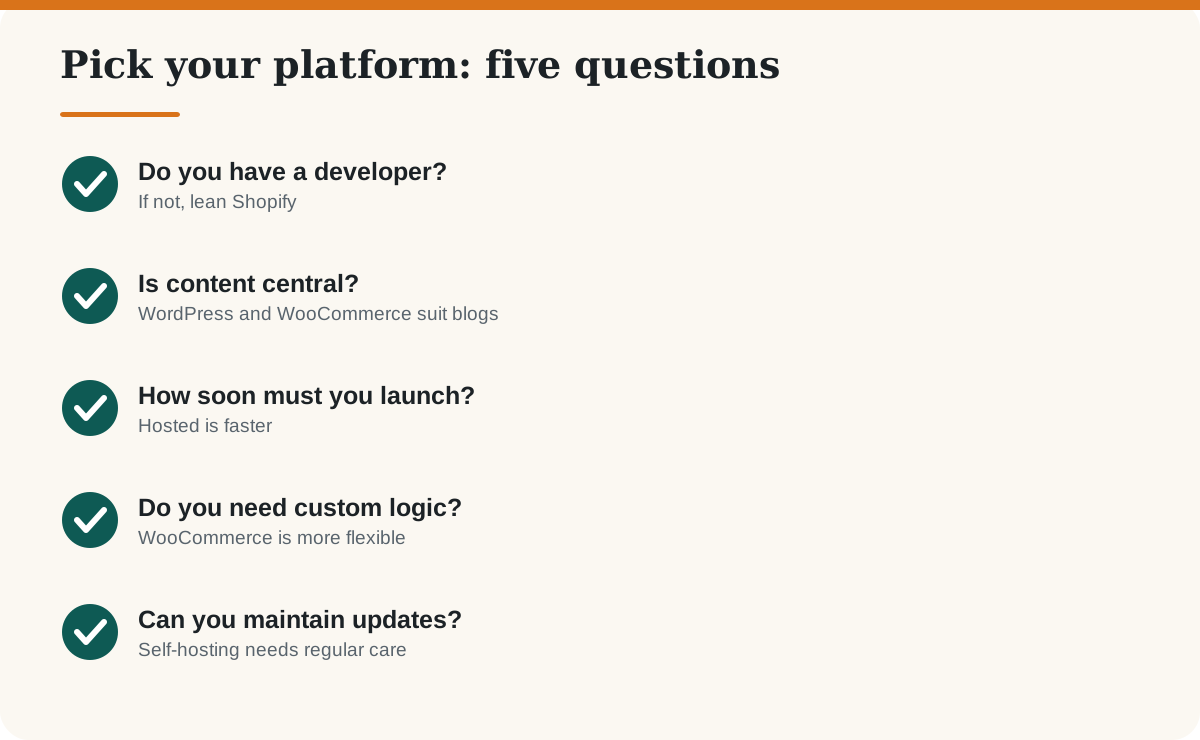
- First-time seller with a small catalogue and no developer: Shopify usually gets you selling sooner with less to maintain.
- An existing WordPress blog that wants to sell products: WooCommerce lets you add a shop to the site and audience you already have.
- A business with custom pricing, bundles or integrations: WooCommerce’s open code is easier to bend, provided you have a developer. Some such stores also succeed on Shopify with the right apps, so test your must-have features first.
Mistakes to avoid when choosing
- Comparing only the monthly subscription and ignoring apps, hosting and developer time.
- Choosing a platform before checking that your payment gateway and courier work with it.
- Cheap shared hosting for WooCommerce, which can make checkout slow at peak times.
- Skipping backups and security updates on a self-hosted store.
- Going live without testing a full order, payment, GST invoice and return.
New to selling online? Start with how to start an online store in India, then review GST for online sellers.
Frequently asked questions
Is Shopify or WooCommerce better in India?
It depends on your skills, budget and goals. Shopify is easier to launch; WooCommerce offers more control. Compare the total yearly cost and the tools you need.
Is WooCommerce free?
The plugin is free, but you pay for hosting, a domain, premium themes or plugins and maintenance.
Can I accept UPI on both?
Both can accept UPI through supported payment gateways. Check each gateway’s fees and setup requirements.
Can I create GST invoices in Shopify or WooCommerce?
Usually through apps or plugins. Test the invoice format with your accountant before you go live.
Can I switch from Shopify to WooCommerce later?
Yes. Products, customers and orders can be migrated, but it takes planning and may affect URLs and SEO, so use redirects.
Which is better for beginners?
Shopify is usually easier for non-technical beginners. WooCommerce suits people comfortable with WordPress or with a developer’s help.
Sources
Last checked: October 2026. Prices and features change often, so we deliberately avoid quoting plan prices here.