
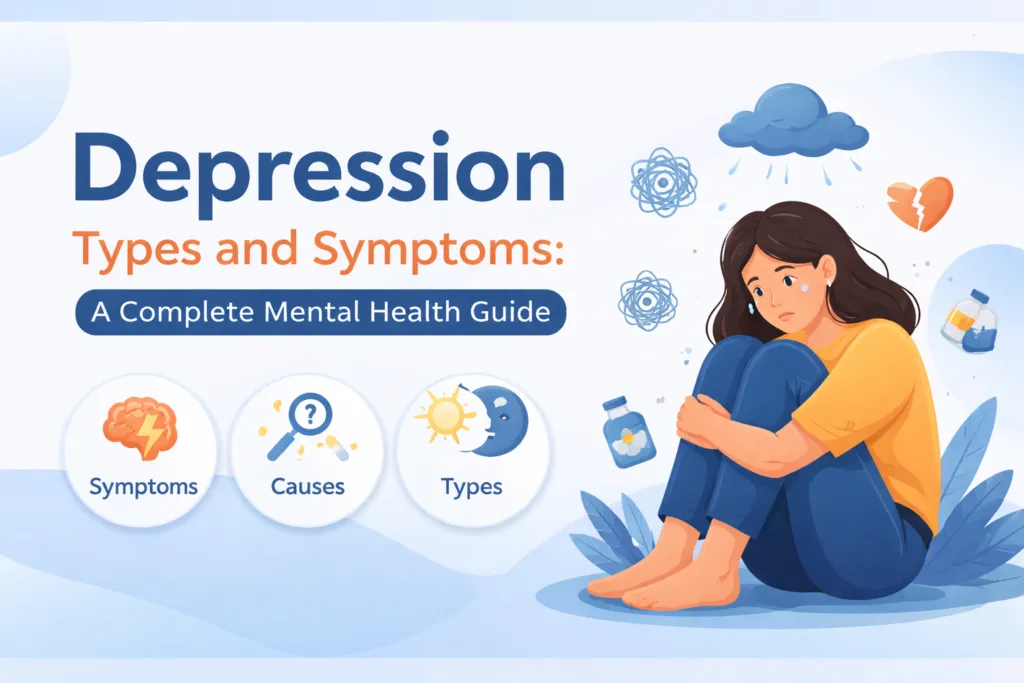
Depression Types and Symptoms: A Complete Mental Health Guide
This article gives general information and is not medical advice. If you are worried about your health, speak to a qualified doctor. In India, Tele-MANAS offers a free 24-hour mental health helpline on 14416.
Depression is a serious mental health condition that affects emotions, thoughts, and physical well-being. This guide explains the major symptoms of depression, explores key depression causes such as genetics, lifestyle, and life events, and breaks down different depression types like major depression, bipolar disorder, and seasonal depression.
We all experience sadness. A bad day, a setback, or emotional stress can leave us feeling drained. But what happens when that feeling doesn’t go away? When it lingers for weeks, affects your energy, disrupts your sleep, and takes away your motivation?
That’s when it may no longer be just a passing phase — it could be depression.
Understanding the symptoms of depression early can make a meaningful difference. This guide walks through causes and warning signs, different forms, and when to seek help.
What Is Depression?
Depression is a recognised mental health condition that affects how a person thinks, feels, and behaves. It’s not just emotional — it can also impact physical health, relationships, and daily functioning.
Unlike temporary sadness, depression persists and often worsens without support. Recognising the symptoms is the first step toward awareness and recovery.
Common Symptoms of Depression
Depression doesn’t look the same for everyone, but there are common patterns. These symptoms may appear gradually or suddenly:
- Persistent sadness or empty mood
- Loss of interest in activities once enjoyed
- Fatigue or lack of energy
- Changes in appetite or weight
- Trouble sleeping or oversleeping
- Difficulty concentrating
- Feelings of worthlessness or guilt
- Irritability or frustration
- Physical aches without clear cause
- Thoughts of death or suicide
Sometimes these symptoms are subtle and easily overlooked, especially in the early stages.
Why Do People Get Depressed?
There’s no single reason behind depression — instead, multiple factors typically contribute together.
1. Biological Factors
Brain chemistry plays a key role — imbalances in neurotransmitters can contribute to emotional instability.
2. Genetics
A family history of mental health conditions increases vulnerability — a common cause that runs across generations.
3. Life Events
Loss, trauma, or major life changes can trigger emotional distress — often situational, but genuinely impactful.
4. Hormonal Changes
Hormonal shifts during pregnancy, menopause, or illness can influence mood.
5. Lifestyle Factors
Poor sleep, lack of exercise, and substance use are also recognised contributing factors.
6. Chronic Illness
Living with long-term health conditions can increase mental strain over time.
Understanding these contributing factors helps in identifying personal triggers and managing them more effectively.
Types of Depression You Should Know
Depression isn’t a one-size-fits-all condition. There are multiple recognised types, each with distinct characteristics.
1. Major Depressive Disorder (MDD)
The most common form, involving intense symptoms lasting at least two weeks.
2. Persistent Depressive Disorder (Dysthymia)
A long-term, chronic form lasting for years, with milder but ongoing symptoms.
3. Bipolar Disorder
Characterised by mood swings between depressive and manic (or hypomanic) episodes — one of the more complex forms, requiring careful, accurate diagnosis for appropriate treatment.
4. Seasonal Affective Disorder (SAD)
Occurs during specific seasons, usually winter, linked to reduced sunlight exposure.
5. Postpartum Depression
Affects new mothers after childbirth, driven by hormonal and emotional changes.
6. Depression With Psychotic Features
Involves severe depressive symptoms alongside hallucinations or delusions — a serious presentation requiring specialist psychiatric care. Each of these forms responds to somewhat different treatment approaches.
Emotional vs. Physical Symptoms
Depression affects both mind and body.
Emotional Signs
- Hopelessness
- Loss of interest
- Low self-esteem
Physical Signs
- Headaches
- Digestive issues
- Fatigue
Many people overlook physical discomfort without realising it may also be a symptom of depression.
Early Warning Signs Worth Paying Attention To
Depression often starts subtly. Early signs can include:
- Constant tiredness
- Lack of motivation
- Social withdrawal
- Feeling overwhelmed by small tasks
Recognising these signs early can help prevent things from worsening.
When It’s Not Obvious: “High-Functioning” Depression
Not everyone shows visible signs. Some people appear to be coping well outwardly while struggling internally — sometimes informally described as “high-functioning depression,” where someone continues meeting daily responsibilities while quietly dealing with real internal distress. These less visible symptoms often go unnoticed by people around them.
What Triggers Depression?
Triggers vary from person to person, and commonly include:
- Breakups or loss
- Financial stress
- Work pressure
- Social isolation
In many cases, a combination of factors leads to depression rather than a single trigger — which is worth knowing, since people sometimes dismiss what they’re feeling because no single “big” cause seems obvious.
Depression in Different Age Groups
Teenagers
- Mood swings
- Academic pressure
- Social anxiety
Adults
- Career stress
- Relationship issues
Older Adults
- Loneliness
- Health concerns
Different age groups tend to experience depression shaped by the pressures and circumstances typical of that life stage.
How Depression Affects Daily Life
Depression is more than emotional pain — it can also impact:
- Work performance
- Relationships
- Physical health
- Decision-making ability
These disruptions are often linked to symptoms that have gone unaddressed for a prolonged period.
When Should You Seek Help?
Consider professional help if:
- Symptoms last more than two weeks
- Daily life becomes genuinely difficult
- You experience thoughts of self-harm
Ignoring these symptoms tends to make recovery harder, not easier.
Diagnosis and Treatment
Diagnosis
Mental health professionals evaluate symptoms, personal history, and behaviour patterns to arrive at an accurate diagnosis.
Treatment Options
1. Therapy
Cognitive Behavioural Therapy (CBT) is widely used and well-supported by evidence.
2. Medication
Antidepressants, prescribed and monitored by a doctor or psychiatrist, can help regulate brain chemistry for some people.
3. Lifestyle Changes
Exercise, nutrition, and sleep can support recovery as a complement to professional treatment, particularly for milder symptoms.
Different forms of depression respond differently to treatment, which is why personalised, professional-guided care matters more than a generic approach.
Coping Strategies That Genuinely Help
- Stay physically active
- Maintain a routine
- Talk to someone you trust
- Practice mindfulness
These strategies can help reduce symptom intensity over time, alongside — not instead of — professional treatment when symptoms are significant.
Breaking the Stigma Around Depression
Many people avoid seeking help due to stigma, believing depression reflects weakness. In reality, it’s a medical condition influenced by real biological, genetic, and environmental factors — just like physical illnesses.
Understanding this helps create a more supportive environment for those affected.
How to Support Someone With Depression
If someone you know is struggling:
- Listen without judgment
- Encourage professional help
- Be patient and supportive
Recognising their symptoms can help you respond with genuine empathy rather than misunderstanding.
Recovery Is Possible
Depression can feel overwhelming, but it’s genuinely treatable. With the right combination of support, therapy, and lifestyle changes, many people recover and go on to lead fulfilling lives — including those dealing with more severe presentations.
Final Thoughts
Depression is complex, but understanding it makes it more manageable. By recognising symptoms, identifying underlying causes, and understanding the different forms it can take, you can take meaningful steps toward healing — for yourself or someone you care about.
If you’re struggling: This article is educational and not a substitute for professional diagnosis or care. If you’re experiencing thoughts of self-harm or suicide, please reach out for support right away — in India, you can contact the KIRAN Mental Health Helpline at 1800-599-0019 (toll-free, 24/7). If you’re outside India, please search for a crisis line in your country, or contact local emergency services. You don’t have to go through this alone.
Frequently Asked Questions
-
What are the most common symptoms of depression?
The most common symptoms include persistent sadness, loss of interest in activities, fatigue, sleep disturbances, changes in appetite, difficulty concentrating, and feelings of hopelessness or guilt.
What are the main causes of depression?
Common contributing factors include genetics, brain chemistry, traumatic life events, chronic stress, hormonal changes, and lifestyle habits — usually acting in combination rather than as a single cause.
How many types of depression are there?
Several recognised types exist, including major depressive disorder, persistent depressive disorder, bipolar disorder, seasonal affective disorder, postpartum depression, and depression with psychotic features.
How can I identify early symptoms of depression?
Early symptoms may include low energy, lack of motivation, irritability, social withdrawal, and difficulty enjoying everyday activities.
Can depression go away without treatment?
In some mild cases, symptoms may ease over time, but most forms benefit from proper treatment — therapy, medication, or lifestyle support — for lasting recovery.
What lifestyle factors can contribute to depression?
Poor sleep, lack of physical activity, unhealthy diet, substance use, and high stress levels are commonly linked contributing factors.
Is depression a serious mental health condition?
Yes — depression affects both emotional and physical health, and ignoring symptoms can lead to more serious complications over time.
How is depression diagnosed?
A doctor or mental health professional evaluates symptoms, medical history, and behaviour patterns — different presentations may need different diagnostic approaches.
What are the best treatments for depression?
Treatment options include therapy (such as CBT), medication, lifestyle changes, and support systems, with the right combination depending on severity and individual circumstances.
When should I seek help for depression?
Seek help if symptoms last more than two weeks, interfere with daily life, or include thoughts of self-harm.